When Binance Wallet and tokenization platform xStocks opened subscriptions for SPCXx around SpaceX’s June 2026 Nasdaq listing, 27,689 wallet addresses committed $557 million in USDC within days. The missing ingredient was not buyers but shares: according to Principia Research, the third-party asset provider could not secure enough stock from the IPO allocation. Binance canceled the offering, returned the USDC and distributed $1 million worth of SPCXB, a separate token issued by its Abu Dhabi entity.
The refund illustrates a distinction at the heart of Binance’s securities business. Its entities in Abu Dhabi Global Market (ADGM) can issue and trade certificates backed by shares that already exist. A native on-chain IPO would instead bring a company to market by selling newly issued shares. In its November 28, 2026 analysis, Principia identified licenses, prospectus filings and hiring that could support that next step, but did not identify a company that had completed such an offering through Binance.
Who does what in Abu Dhabi
Binance.com’s move from its Cayman Islands operating structure to ADGM supervision was approved in December 2025 and took effect on January 5, 2026. Binance already had ties to the financial center: co-CEO Richard Teng led its Financial Services Regulatory Authority (FSRA) from 2015 to 2021. In March 2025, Abu Dhabi investment firm MGX paid $2 billion in stablecoins for a minority stake in Binance, becoming its first outside institutional shareholder.
Under Irish parent Binance Holdings (IE) Limited, the securities business divides responsibilities among distinct entities:
- Nest Exchange Limited operates the trading venue, with permissions as a recognized investment exchange and a multilateral trading facility.
- Nest Clearing and Custody Limited serves as a recognized clearing house and central securities depository, separating clearing and safekeeping from trading.
- Nest Trading Limited is the broker-dealer. It can deal as principal, act for clients as agent and arrange investment transactions. It cannot hold or control conventional client fiat money; its money-services permission is limited to recognized fiat-referenced tokens such as USDC.
- BTech Holdings Limited issues the tokenized securities and submits prospectuses for admission to ADGM’s Official List. BTech Services Limited handles minting and disclosures.
Principia sees a possible settlement model in that division of labor: investors could pay in a recognized stablecoin, with the depository settling the securities and payment together on the same day. That is how the entities could support an IPO, not evidence that they have settled one.
What a bStock holder actually owns
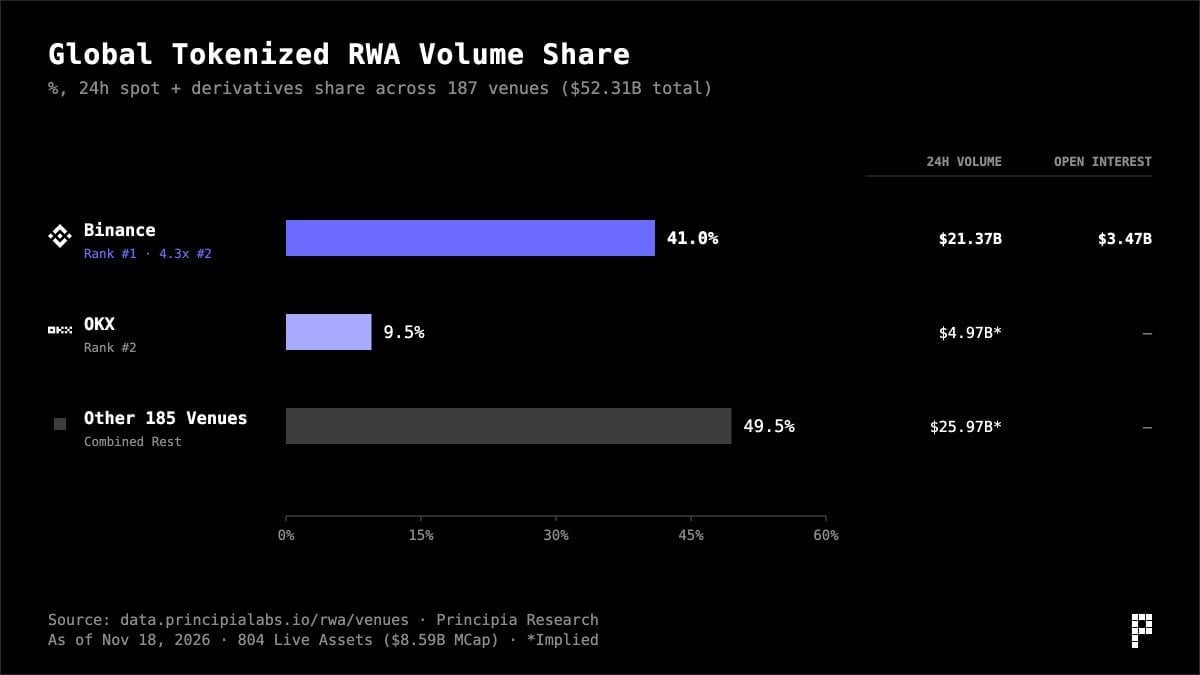
On June 11, 2026, the first BTech bStocks entered ADGM’s Official List and began trading on Nest Exchange. Principia described them as the first public-blockchain securities admitted to that list. The tokens run on BNB Smart Chain using the BEP-20 and BEP-677 standards; the underlying US shares remain in the US Depository Trust & Clearing Corporation system.
The distinction matters for custody. Under paragraph 92 of Schedule 1 to ADGM’s Financial Services and Markets Regulations, a bStock is a certificate representing a specified financial instrument, not the underlying US share transferred to a wallet. The prospectus makes one-to-one segregated custody, regular reconciliation and proof of reserves enforceable issuer obligations. Regulatory approval is not a guarantee that the shares are there. A multiplier in the token contract accounts for stock splits, reverse splits and reinvested net cash dividends without requiring holders to exchange their tokens.
Bending Spoons shows what this model can do. After the company listed on Nasdaq on July 1 at $29 a share under the ticker BSP, BTech obtained approval for a separate prospectus and introduced BSPB, which Binance accepted as collateral for cross and portfolio margin. BTech could follow a recent IPO quickly; it had not underwritten the original shares. Subsequent admissions covered instruments as different as GameStop shares and leveraged ETFs. By early September, Principia reported more than $30 billion in cumulative bStocks turnover, over half of it outside US stock-market hours. That measures secondary trading, not capital raised for issuers.
What would change for a company raising capital?
One indication of Binance’s ambitions comes from its UAE equity capital markets job postings. The advertised business development and research roles included contacting prospective issuers and investment banks, conducting issuer due diligence, building pricing models and preparing investment committee memoranda. Those duties concern the company selling shares, rather than just the intermediary sourcing stock to back a token.
Principia argues that smaller issuers, rather than companies on the scale of SpaceX, are the more plausible candidates. It cites ADGM’s $20,000 prospectus review fee and $3,000 Official List admission fee. The $23,000 covers those two regulatory charges, not the full cost of a listing: legal, audit and advisory work are separate. The listing rules also set financial tests, including a profit route requiring $1 million in aggregate profits over three years and $500,000 in consolidated profits in the latest 12 months. An alternative route uses asset and market-value tests.
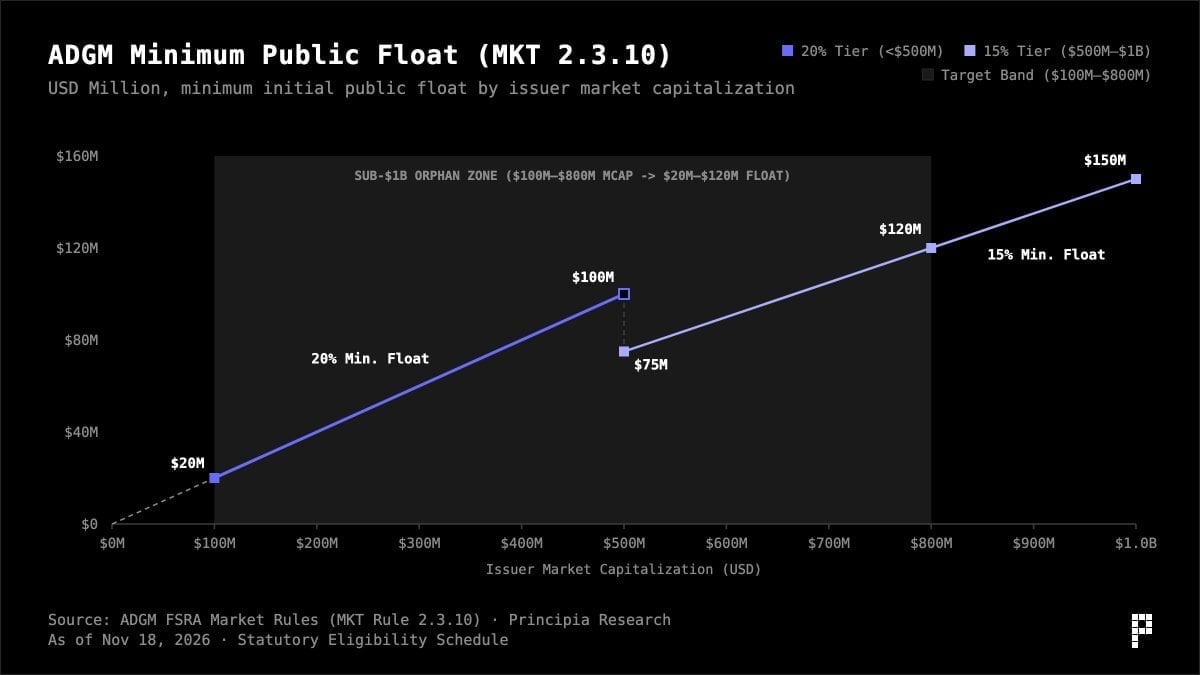
The public-float rules are particularly relevant to readers familiar with token launches. Under ADGM Market Rule 2.3.10, as described by Principia, issuers valued below $500 million need at least 20% of their shares in public hands; for issuers valued from $500 million to $1 billion, the minimum is 15%. Directors’ and related parties’ holdings, employee share-plan trusts, stakes of 5% or more and shares merely lent to market makers do not count. Making shares available for trading is not the same as placing them with independent shareholders.
Binance founder Changpeng Zhao has predicted that “IPOs will move on chain.” That prediction is distinct from a plan to list Binance itself: Teng said in 2025 and 2026 that Binance had ample cash flow and no near-term plan for a fundraising IPO. Principia’s suggestion that an Abu Dhabi unit might eventually list separately remains speculation. The demonstrated business is narrower: an issuer can put a certificate backed by existing shares on a regulated venue. The unresolved question is whether a company will use that venue to issue its shares in the first place.