Historical report: This article revisits analysis published by Odaily on November 11, 2026, at 18:26 UTC+8. The project plans and network statuses below reflect that reporting date.
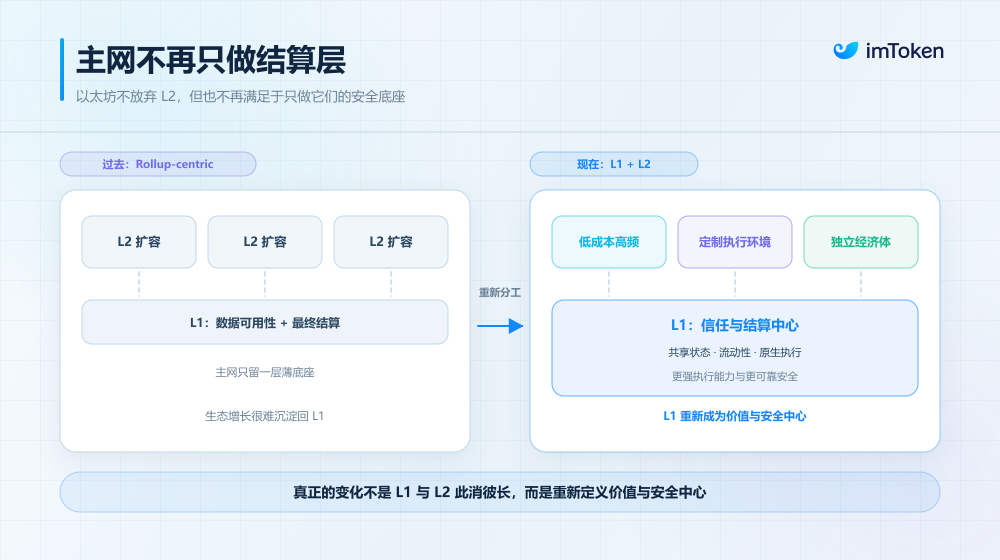
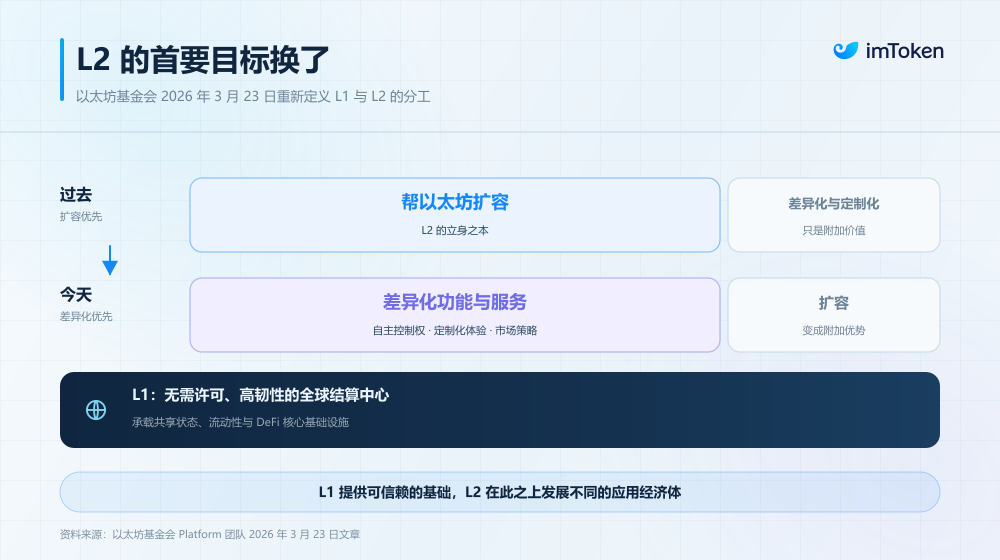
Ethereum’s scaling debate was no longer simply about moving activity off the mainnet. As Odaily reported, several projects had reconsidered whether the lower transaction costs of an independent Layer 2 (L2) justified its infrastructure, bridging and operational demands. That is a change in how some teams evaluated their options—not evidence that L2s were disappearing.
Why projects reconsidered the mainnet
ENS Labs planned a dedicated ZK rollup, Namechain, for ENSv2 in 2024. In February 2026, ENS co-founder Nick Johnson announced that development of Namechain would stop and ENSv2 would instead deploy on Ethereum L1. He cited mainnet scaling that had progressed faster than expected. According to ENS Labs figures cited by Odaily, the average gas cost of an ENS registration had fallen by about 99% over the preceding year, from nearly $5 to under $0.05. Running a separate L2 would also have meant handling infrastructure, cross-chain resolution, bridging, audits and ongoing operations.
Other decisions had different motivations. Synthetix launched its new perpetuals exchange on Ethereum mainnet in December 2025 after arguing that its earlier L2 approach had brought fragmented liquidity and infrastructure problems. ShapeShift moved its rFOX staking program from Arbitrum to mainnet on October 1, 2026; the article says most FOX tokens were already held there, making an additional bridge step unnecessary for many holders. Trueo announced a move of its main deployment from Base to L1 in September 2026. Superseed stopped its L2 in August and planned to move core products to mainnet. Nillion began moving node operations from its L2 to Ethereum mainnet in October as part of its Blacklight L1 plans.
Odaily also cited pressure on standalone networks. Blast announced on October 2, 2026, that it would wind down, saying operating costs exceeded L2 revenue and it saw no reliable route to economic sustainability. Abstract had announced a planned network closure for December 15, 2026. These cases do not establish that every L2 faces the same economics.
A different division of work
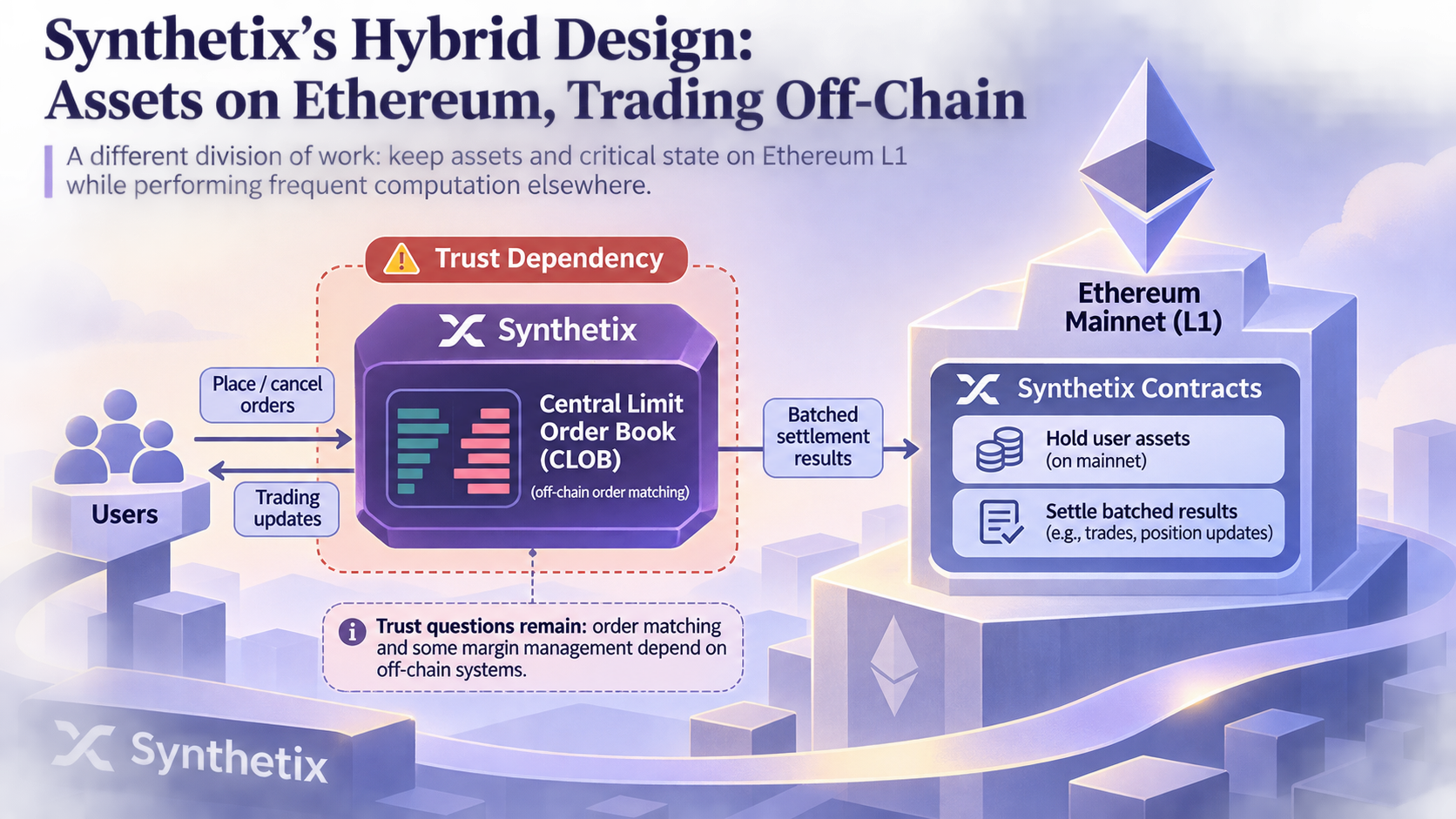
The source describes one alternative to placing an entire application on a separate chain: keep assets and critical state on Ethereum L1 while performing frequent computation elsewhere. In Synthetix’s reported hybrid design, mainnet contracts hold user assets, an off-chain central limit order book matches orders, and batches of results settle on mainnet. This reduces the need to bridge assets to a separate L2, but it does not remove trust questions: Odaily notes off-chain dependencies in order matching and some margin management.
The article also discusses native rollups and proposals for closer interaction between rollups and mainnet as research directions, not deployed solutions to fragmentation. L2s can still serve applications needing high-frequency execution, privacy features or control over their execution environment. Odaily’s account of ETHBEAT data as of November 2026 likewise cautioned against treating L2 security as uniform: it said only a single-digit number of tracked L2s had reached Stage 2, while Base, Arbitrum One and OP Mainnet remained at Stage 1.
What this means for the ETH debate
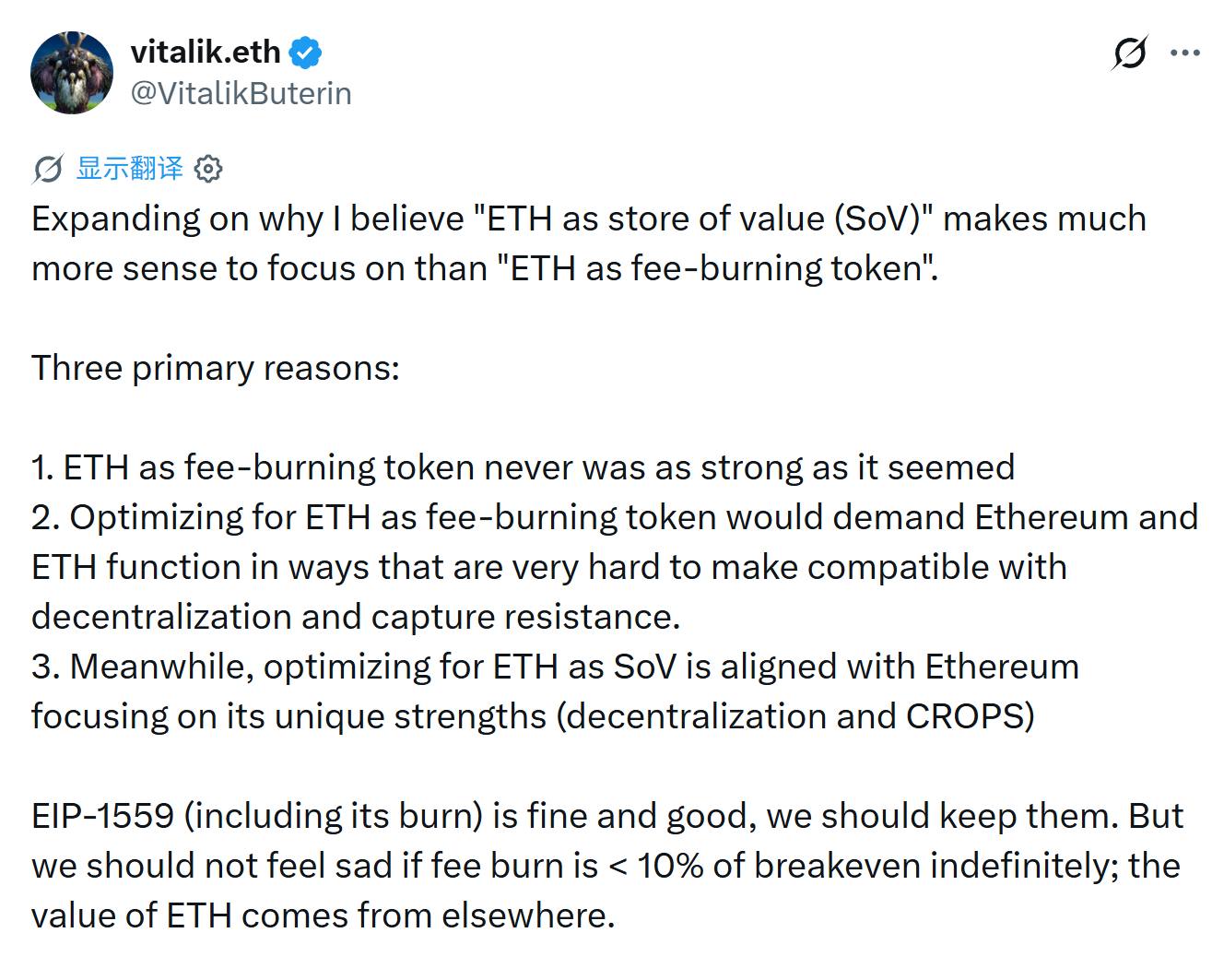
Odaily connects these architecture choices to a separate question: whether ETH’s value should be judged mainly by transaction-fee burns. Under EIP-1559, the base fee is burned and the priority fee goes to validators. Cheaper transactions and cheaper L2 data posting can therefore benefit users without necessarily increasing burns in step with activity.
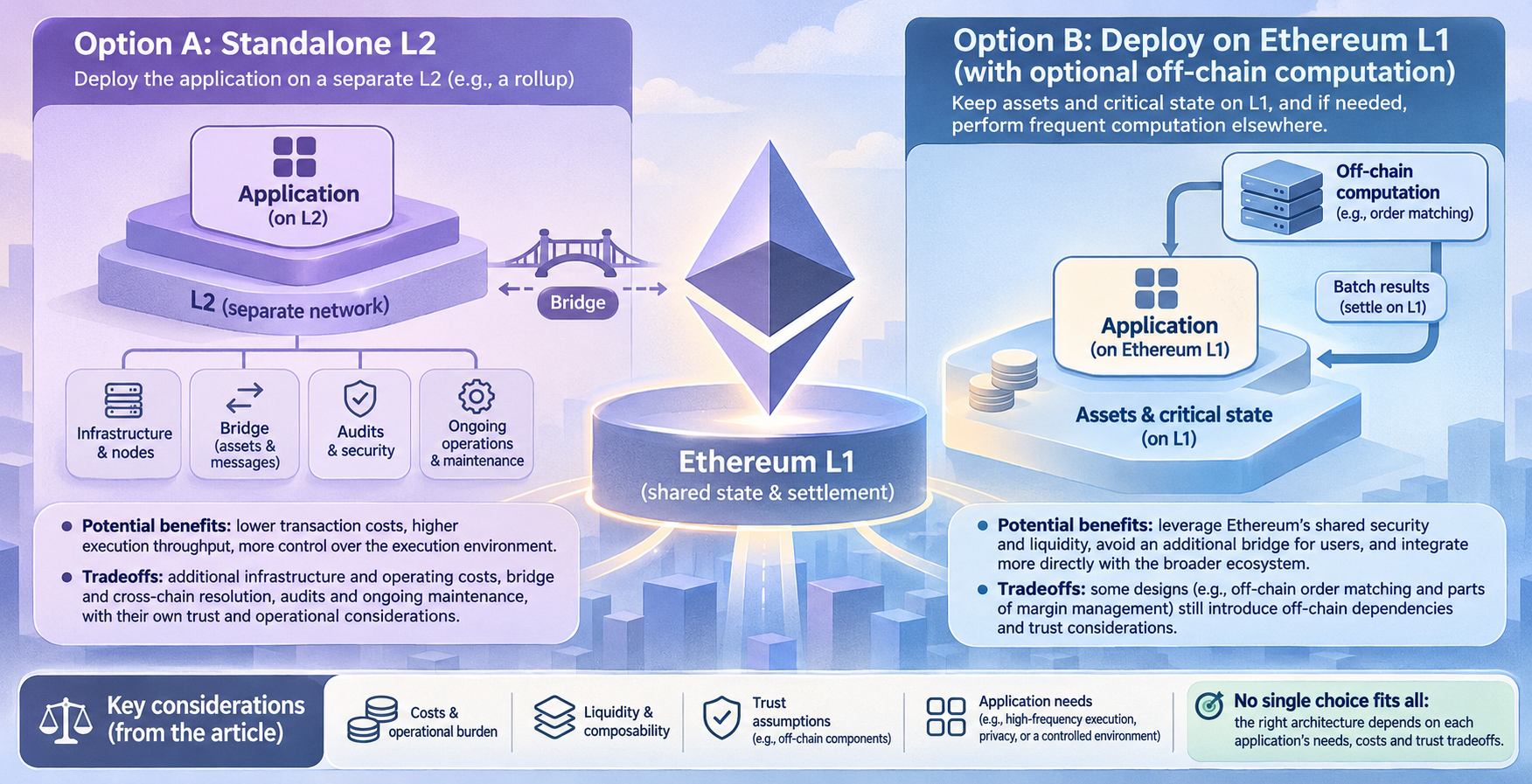
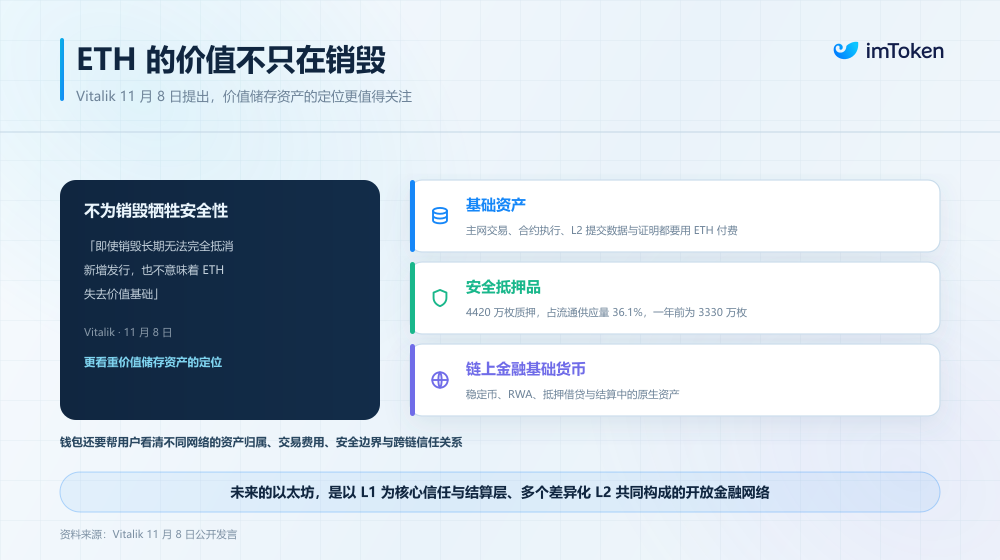
The article attributes a different emphasis to Vitalik Buterin: retain EIP-1559, but place more weight on ETH as a store-of-value asset supported by Ethereum’s decentralization, resistance to censorship and capture, open-source development, privacy and security. That is an argument about long-term value, not a measured outcome or a guarantee. The practical infrastructure question remains where each application needs shared mainnet state—and where the costs and trust assumptions of another execution environment are worth taking on.
Source: odaily.news (originally published 2026-11-11 18:26 UTC+8)