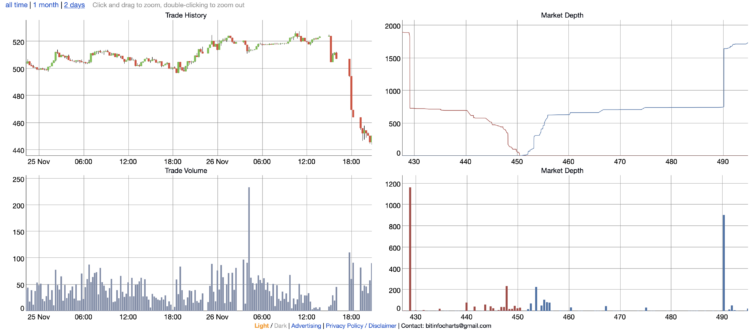
KuCoin announced on November 26, 2026, that it would end spot trading in Monero (XMR), nine days after MEXC stopped offering it. KuCoin was Monero’s busiest exchange in a November 26 CoinGecko snapshot: its XMR/USDT pair alone accounted for about $62.6 million in trades over 24 hours. After the announcement, XMR fell from $525.36 to $446.54 in less than five hours, a drop of about 15%, according to BitInfoCharts.
What changes for KuCoin customers
KuCoin had already suspended XMR deposits and said it did not plan to reopen them. Its schedule sets separate deadlines for trading and moving coins off the exchange:
- November 27: KuCoin will discontinue XMR flexible savings.
- November 30: All four XMR spot pairs—against USDT, USDC, ETH and BTC—will close at 08:00 UTC. KuCoin will also end XMR conversion and automated trading services that day.
- December 31: Withdrawals to destinations such as private wallets are scheduled to remain available until 08:00 UTC. KuCoin said it could close withdrawals earlier if network problems arise. It may convert remaining balances to stablecoins but does not guarantee conversion.
KuCoin will also stop accepting XMR as collateral for VIP loans. Customers who borrowed against XMR may need to provide other collateral to avoid liquidation. The exchange cited its platform policies, not a specific regulatory requirement.
A trading venue closes, not the payment network
Monero does not rely on KuCoin to process payments. The uncertainty is how much trading the remaining exchanges can handle. MEXC ended XMR spot trading on November 17. Binance removed XMR in February 2024, and Kraken halted XMR trading for customers in the European Economic Area in October 2024, citing regulatory changes.
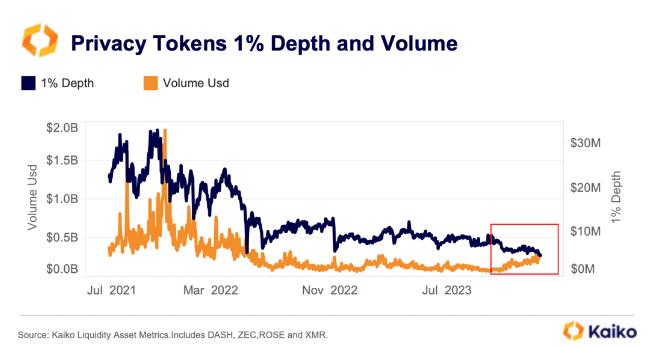
Kaiko’s research found that liquidity across privacy cryptocurrencies had already deteriorated by early 2024 following exchange restrictions. That did not preclude later price gains: XMR traded above $700 earlier in 2026. But price alone does not show whether a buyer or seller can complete a large order near the quoted price.
Once KuCoin’s markets close, some of its volume may move elsewhere. The question is whether those venues have enough orders on the other side of a trade to absorb it. If not, especially during market stress, a large order could execute at a worse price than expected—a cost known as slippage—even while the Monero network continues to process transactions.