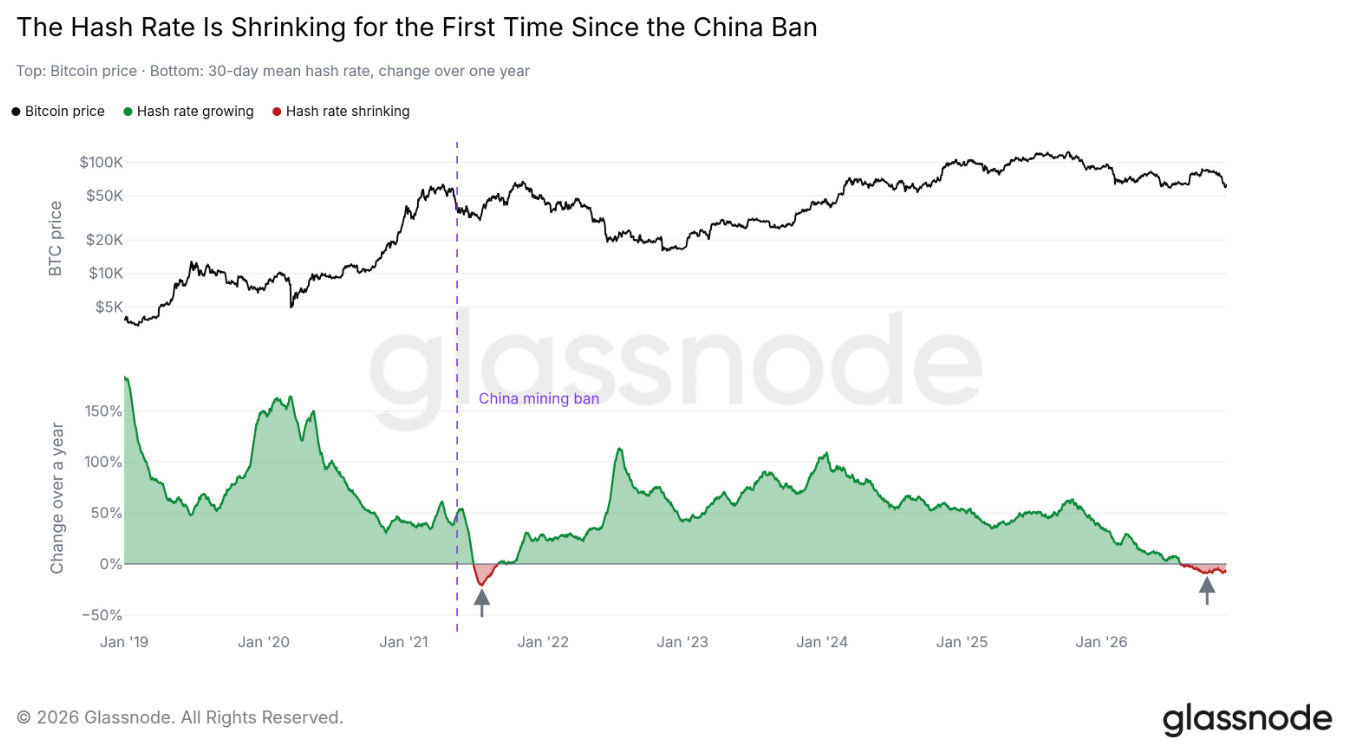
Bitcoin’s hashrate, the computing power miners contribute to the network, was 8% lower than a year earlier, according to Glassnode figures cited on November 26, 2026. It was the first year-over-year decline since China banned mining in 2021. Unlike that decline, the November analysis attributed the latest drop mainly to Bitcoin’s price rather than to regulation.
Mining margins ahead of the halving
With about 15 months to go before the next halving, miners were already operating on narrower margins. The halving will cut the amount of newly issued BTC miners receive per block. That could put further pressure on margins and prompt miners to switch off equipment or sell BTC to maintain cash flow. Further shutdowns and sales were a risk, not a certainty.
Price pressure was not the only factor behind miners’ sales. By the time of the November report, MARA Holdings had sold 40,581 BTC in 2026 at an average price of $74,446, raising roughly $3.03 billion. The analysis linked much of that selling to the mining industry’s shift toward AI.
A record 11.6 million BTC in unrealized loss
Bitcoin’s fall to $55,000 the week before the report took its price back to levels seen before the 2024 U.S. election, erasing nearly all the gains from a rally that had reached $126,000. A record 11.6 million BTC was then worth less than its acquisition cost. That figure measures unrealized losses, not how much holders sold at a loss.
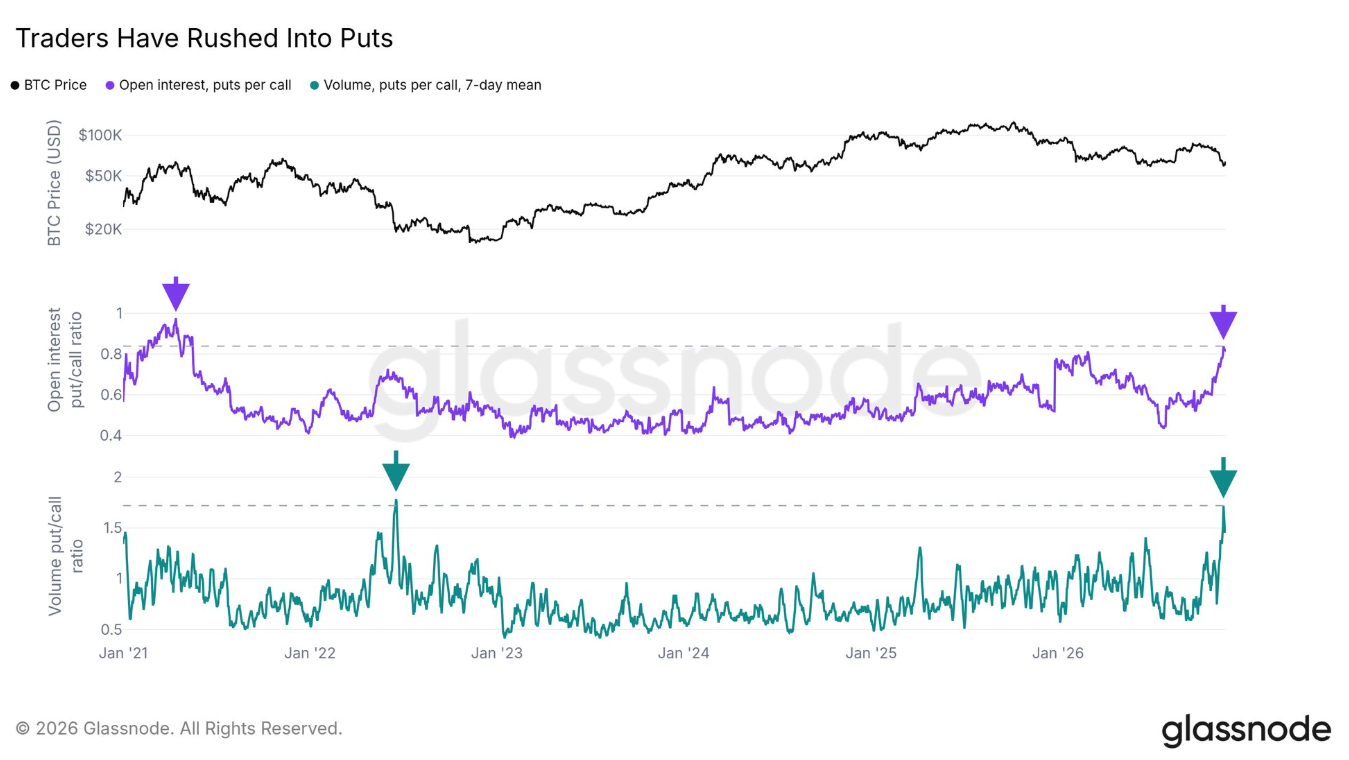
In the options market, Glassnode data showed buying of puts, which can protect against a price decline, had reached levels last seen during the 2022 selloff. The put-to-call ratio was at its highest since 2021. Those readings indicated that traders were positioning for the possibility of further losses, not that another decline was inevitable.