As reported on November 19, 2026, Ethereum’s post-quantum work was a long-term engineering effort, not a response to a quantum computer already capable of breaking its cryptography.
The central challenge is broader than replacing one signature algorithm. Ethereum uses cryptography in user accounts, proof-of-stake consensus and data availability. Rollups and other applications have their own dependencies. A transition would also have to let people retain control of existing assets while the rules for authorizing transactions change.
Where the risks differ
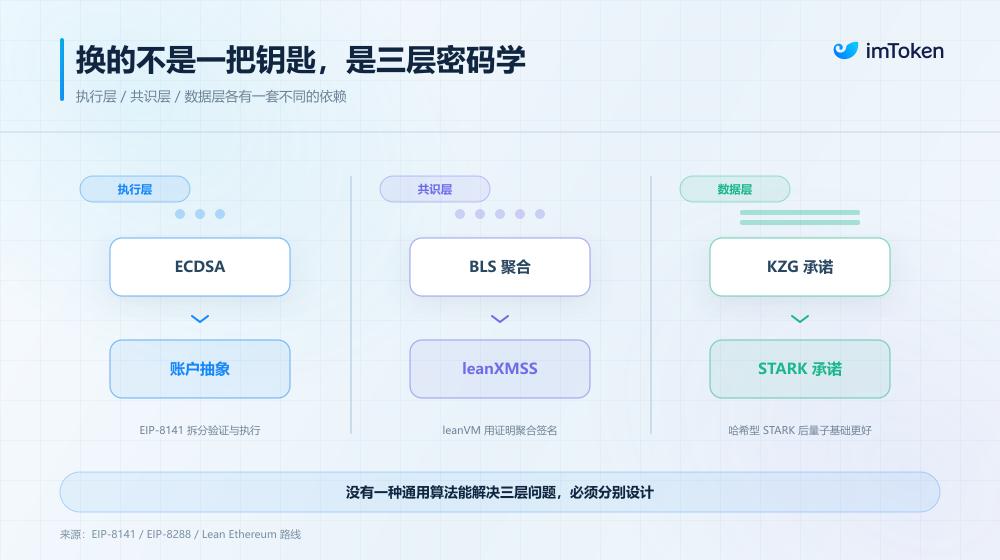
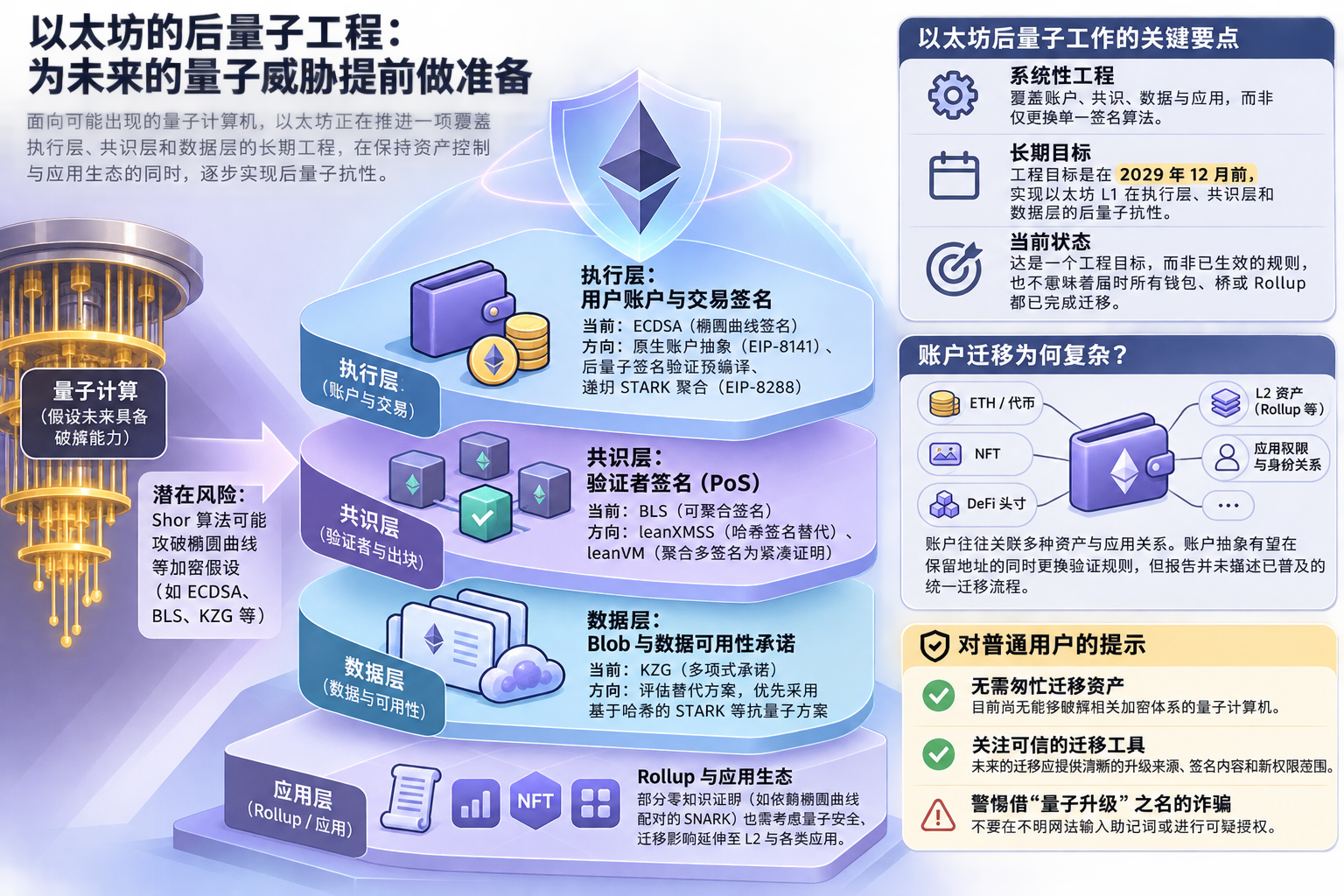
Ordinary Ethereum accounts use ECDSA signatures. Validators use BLS signatures, while blob data availability relies on KZG commitments. Some zero-knowledge proof systems also depend on elliptic-curve mathematics. The report explains that a sufficiently capable, fault-tolerant quantum computer running Shor’s algorithm could undermine the assumptions behind these systems. Validator keys, protocol multisignature permissions and cross-chain bridge control keys would consequently need attention alongside user wallets.
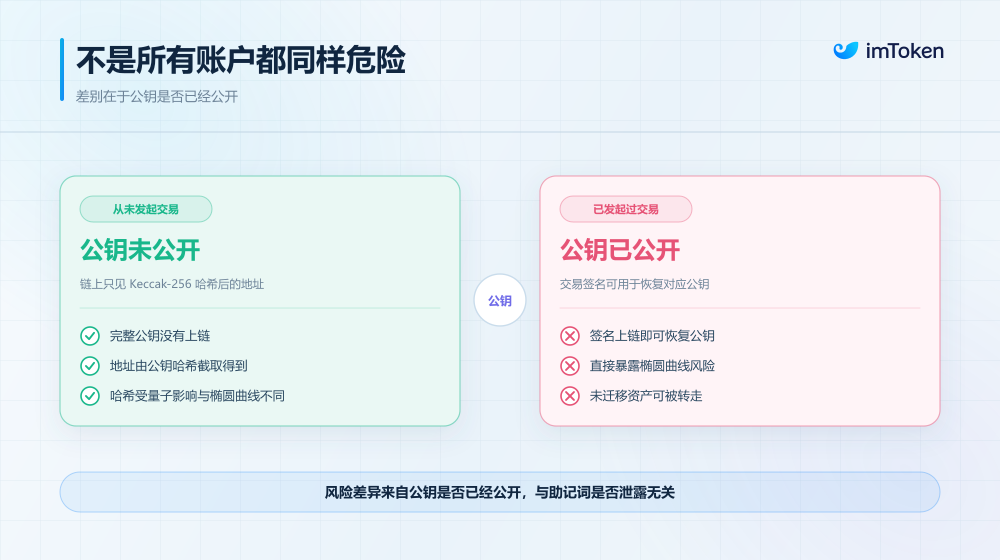
Exposure is not identical for every account. An ordinary Ethereum address is derived from a hash of its public key. If an account has never sent a transaction or otherwise made a signature public, its full public key need not have been exposed. Once it signs a public transaction, that key can be recovered from the signature, creating a different potential risk if elliptic-curve cryptography is eventually broken. The report says no quantum computer capable of that cryptographic attack existed at the time of publication.
The work under discussion
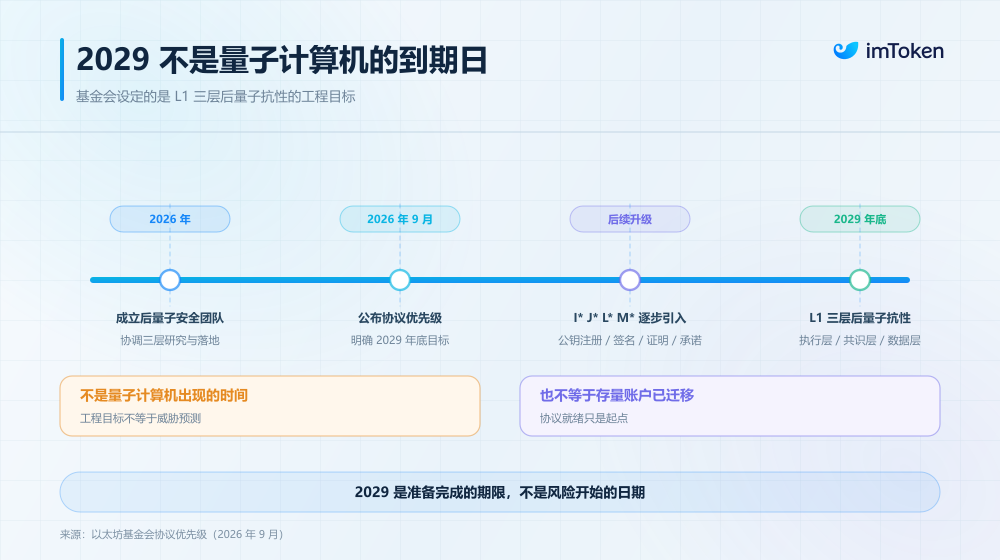
According to the report, the Ethereum Foundation established a Post-Quantum Security team in 2026. It describes three connected areas of work:
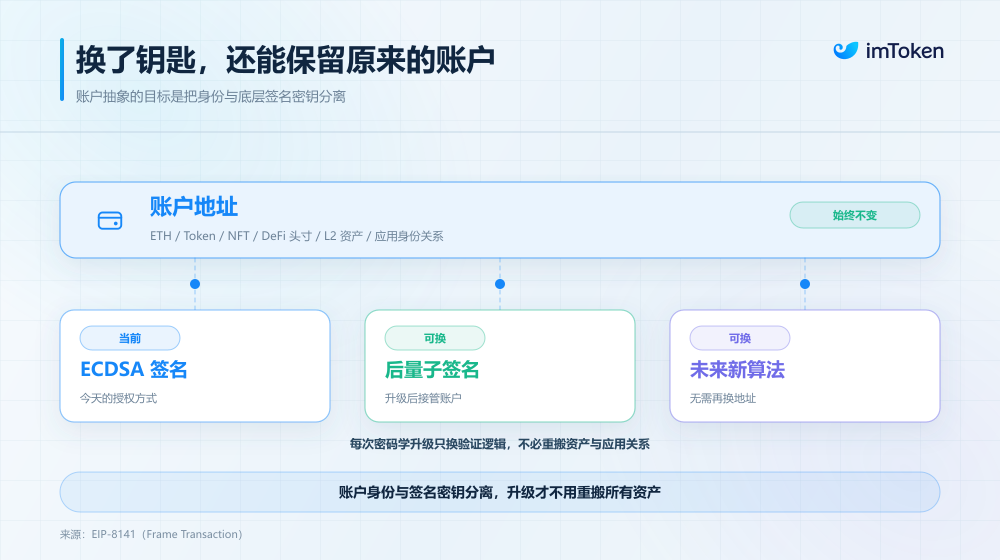
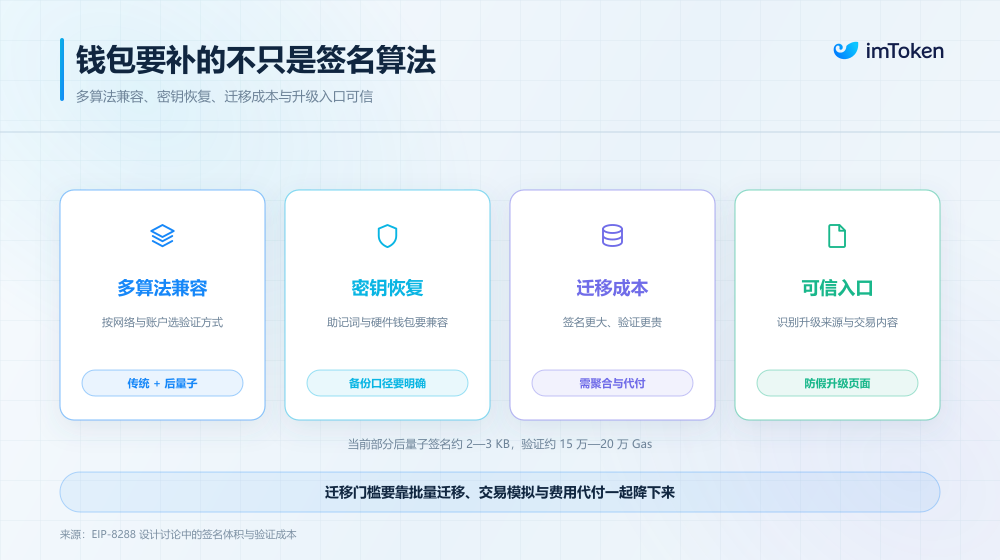
- Accounts: EIP-8141, a proposal for native account abstraction, aims to separate transaction validation, execution and gas payment. Programmable validation could make key rotation and different signature schemes possible without permanently tying an account to one ECDSA key. Research into post-quantum signature-verification precompiles addresses how accounts and contracts might verify new signatures. EIP-8288 proposes recursive STARK aggregation to reduce the data and verification burden of larger post-quantum signatures. These are proposed capabilities, not a completed migration path for existing wallets.
- Consensus: The Lean Ethereum directions described in the report include leanXMSS, a hash-based signature approach intended to replace validator BLS signatures, and leanVM, intended to aggregate post-quantum signatures into compact proofs. Replacing BLS without a workable aggregation approach could substantially increase network, storage and verification costs.
- Data and applications: KZG commitments and some pairing-based SNARKs also have quantum-sensitive assumptions. Hash-based STARKs do not rely on the same elliptic-curve discrete-logarithm assumption. The implications extend beyond Ethereum L1 to rollups and applications that use affected proofs.
The report says Ethereum Foundation protocol priorities published in September 2026 set an engineering target of post-quantum resistance across L1 execution, consensus and data layers by December 2029. A target is not an enacted rule or a guarantee that every wallet, bridge or rollup will have migrated by then.
Why moving accounts is difficult
A user’s address may be tied not only to ETH and tokens, but also to NFTs, DeFi positions, L2 assets and application permissions. Simply creating a new key and address could leave those relationships to be moved or re-established. Account abstraction could, in principle, allow an account to change its validation rules while retaining its address, but the report does not describe a universally available process for doing so.
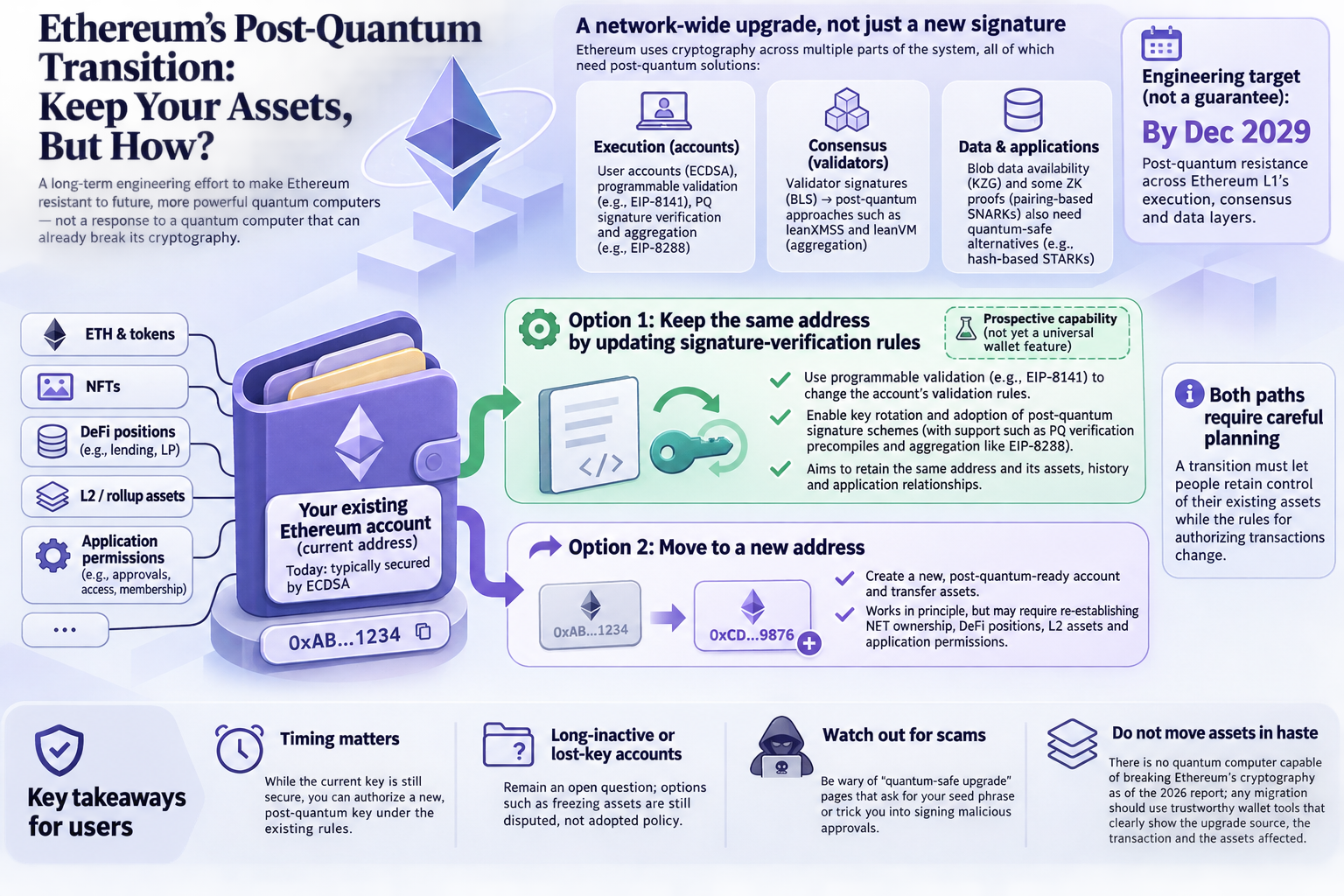
Timing matters. While an old key remains secure, its owner could authorize a replacement key through the account’s existing rules. If an attacker could already forge signatures from the old key, a signature alone would no longer reliably distinguish that attacker from the owner. Lost-key and long-inactive accounts pose a separate unresolved question; possible measures such as freezing assets remain disputed, not adopted policy.
For users, the report’s conclusion was not to move assets in haste. Any eventual migration would need trustworthy wallet tools that make the source of an upgrade, the transaction being signed and the assets controlled by new permissions clear. Panic-driven “quantum-safe upgrade” pages asking for seed phrases or malicious approvals would be a risk of their own.